

Pelvic Congestion Syndrome Treatment in Spokane Valley, WA
Image-Guided Treatment for Pelvic Vein Disorders
Pelvic congestion syndrome (PCS) is a common but often overlooked cause of chronic pelvic pain in women. It occurs when veins in the pelvis become enlarged and fail to circulate blood properly, leading to pressure, pain, and discomfort that can worsen throughout the day or after long periods of standing.
At Peak IR, our interventional radiologists diagnose and treat pelvic congestion syndrome. Through a minimally invasive procedure called pelvic vein embolization, we block the affected veins, which can relieve pressure and restore healthy blood flow.
Understanding Pelvic Congestion Syndrome
Pelvic congestion syndrome occurs when the valves in the pelvic veins weaken or fail, causing blood to pool and veins to stretch. This increased pressure leads to pain and a heavy, aching sensation in the lower abdomen or pelvis.
Common symptoms include:
- Dull, aching pelvic pain lasting more than six months
- Pain that worsens after standing, sitting, or physical activity
- Increased discomfort before or during menstruation
- Pain during or after sexual intercourse
- Visible varicose veins on the thighs, buttocks, or vulva
PCS is often underdiagnosed because its symptoms can overlap with other conditions. Accurate diagnosis through imaging is key to effective treatment.
Precise, Image-Guided Diagnosis
Our physicians use advanced imaging tools, including intravascular ultrasound and venography, to identify which veins are affected, allowing a precise and targeted treatment that delivers lasting results.
Why Seek Treatment for Pelvic Congestion Syndrome
Collaborative Women’s Health Care
We work closely with your gynecologist and primary care provider to ensure coordinated care and continuity throughout your treatment journey. Our multidisciplinary approach ensures the best possible outcomes.
Minimally Invasive Treatment with Lasting Relief
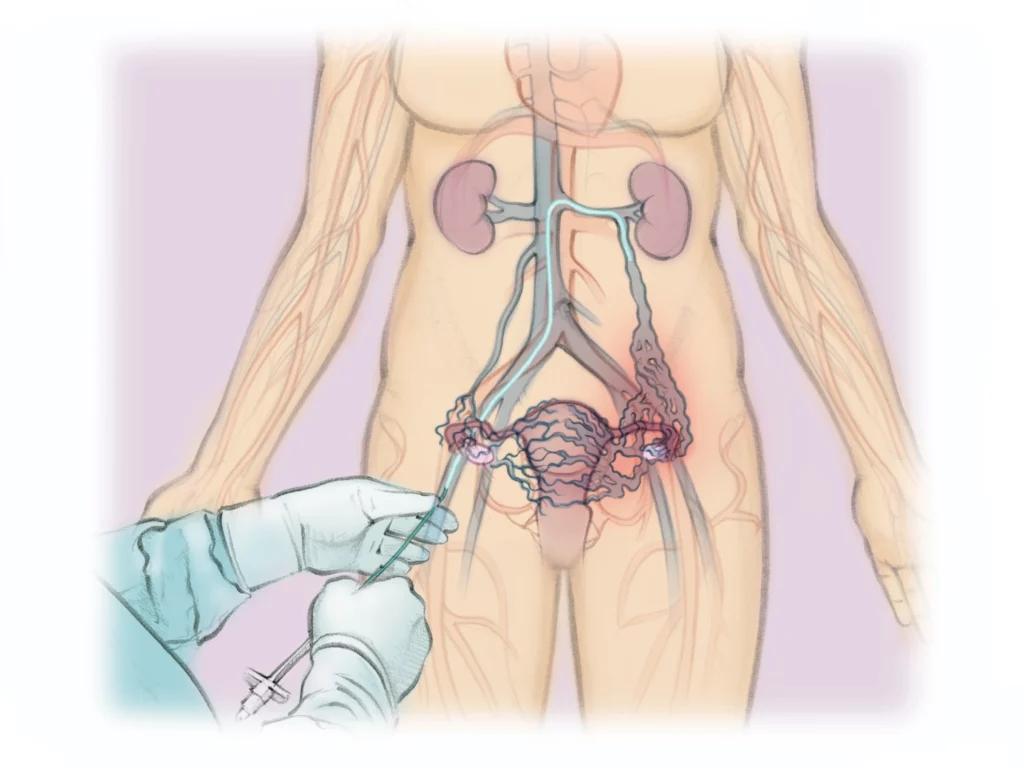
Pelvic vein embolization is performed through a small puncture, usually in the neck or groin. Using real-time imaging, the interventional radiologist guides a catheter into the affected veins and delivers tiny coils or embolic agents to block abnormal blood flow. The procedure usually takes less than an hour, and patients are able to return home the same day.
Experienced Specialists You Can Trust
At Peak IR, you’re cared for by interventional radiologists with extensive experience treating complex venous conditions. Their expertise ensures that every procedure is performed safely, effectively, and with the highest level of precision.
How Pelvic Vein Embolization Works
Accessing the Affected Veins
The procedure begins with a small puncture in the neck or groin. Using fluoroscopic imaging, the interventional radiologist navigates a thin catheter to the affected veins in the pelvis.
Targeted Embolization
Once the source of venous congestion is identified, tiny coils or medical agents are placed inside the veins to block abnormal blood flow. This redirects blood to healthy veins and reduces pressure in the pelvic area.
Recovery and Results
Most patients experience significant improvement in pelvic pain, pressure, and discomfort after treatment. This typically begins within several weeks and continues to improve over the following months. Studies show that over 85% of women report lasting symptom relief following pelvic vein embolization.
Comparing Your Treatment Options
| Feature | Pelvic Vein Embolization | Hysterectomy | Medication Therapy | Observation |
|---|---|---|---|---|
| Approach | Image-guided, minimally invasive | Surgical removal of uterus | Pain or hormone management | No intervention |
| Hospital Stay | Outpatient | Several days | None | None |
| Recovery Time | Few days | 4–6 weeks | Ongoing | N/A |
| Effectiveness | Relieves pain by closing diseased veins | May not address vein cause | Temporary symptom relief | Symptoms often persist |
| Fertility | Low risk of impacting fertility | Ends fertility | Preserves fertility | Preserves fertility |
| Anesthesia | Local with sedation | General | None | None |
What to Know About Pelvic Congestion Syndrome Treatment
Who is a candidate for pelvic vein embolization?
Women with chronic pelvic pain lasting longer than six months that worsens with standing or physical activity may benefit from pelvic vein embolization.
How is pelvic congestion syndrome diagnosed?
Diagnosis often begins with a detailed history and pelvic ultrasound, followed by advanced imaging such as MRI or venography to confirm the presence of dilated pelvic veins.
Is pelvic vein embolization safe?
Yes. The procedure is very safe and has a low risk of complications. Some patients may experience mild soreness or fatigue for a few days after treatment, which resolves quickly.
When will I notice results?
Most patients start noticing pain relief within a few weeks, with continued improvement over several months as blood flow normalizes.
Will my insurance cover treatment?
Pelvic vein embolization is covered by most major insurance providers when medically indicated. Our staff will assist with pre-authorization and confirm coverage before scheduling your procedure.

Our Team
At the heart of Peak IR is a team of physicians who combine national expertise with a local commitment to care.




Take the First Step Toward Relief
At Peak IR, we believe women deserve effective, compassionate solutions for chronic pelvic pain. Our minimally invasive treatments target the root cause of pelvic congestion syndrome, restoring comfort, confidence, and quality of life.