

Enlarged Prostate Treatment in Spokane
Prostate Artery Embolization (PAE) in Spokane
An enlarged prostate, also known as benign prostatic hyperplasia (BPH), is a common condition that affects many men as they age. Symptoms such as frequent urination, weak urinary flow, and nighttime urgency can interfere with sleep, comfort, and quality of life.
At Peak IR, our interventional radiologists offer prostate artery embolization (PAE), a minimally invasive, image-guided treatment that provides long-lasting relief from BPH symptoms.
Understanding Benign Prostatic Hyperplasia (BPH)
Benign prostatic hyperplasia is a non-cancerous enlargement of the prostate gland that occurs in many men over the age of 50. As the prostate grows, it can compress the urethra and block urine flow, causing a range of urinary symptoms.
Common BPH symptoms include:
- Frequent urination, especially at night
- Difficulty starting or stopping urination
- Weak or interrupted urine stream
- Incomplete bladder emptying
- Urgency or dribbling after urination
While medications can provide temporary relief, they may cause side effects or lose effectiveness over time. Prostate artery embolization offers a safe, durable alternative for men who want to avoid surgery.
Advanced, Image-Guided Precision
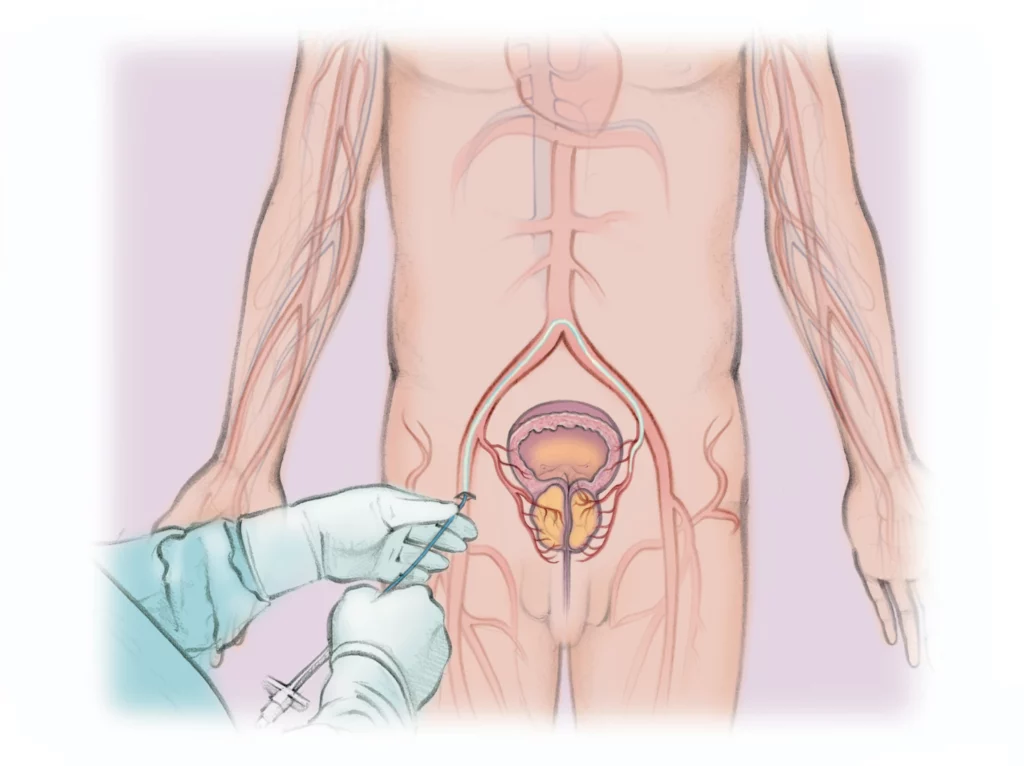
PAE is performed using real-time X-ray guidance to deliver treatment directly to the arteries supplying the prostate. By precisely targeting these blood vessels, our specialists can reduce the size of the prostate and improve urinary symptoms while preserving healthy tissue.
Why Choose Prostate Artery Embolization at Peak IR
Minimal Risk of Sexual Side Effects
Unlike traditional prostate surgeries, PAE has a very low risk of complications or sexual side effects. The procedure preserves erectile and ejaculatory function while effectively improving urinary symptoms.
Outpatient, No-Surgery Approach
Prostate artery embolization is performed through a small puncture in the wrist or groin using a catheter about the width of a piece of spaghetti. No incisions or general anesthesia are required. Patients return home the same day and resume normal activities within a few days.
How Prostate Artery Embolization Works
Step 1: Access and Imaging
The procedure begins with a small puncture in the artery in the wrist or groin. Using live X-ray guidance, a catheter is advanced into the arteries that supply blood to the prostate.
Step 2: Targeted Embolization
Microscopic beads are injected into these arteries to block blood flow to the enlarged prostate. This causes the prostate to shrink over time, relieving pressure on the urethra and improving urinary flow.
Step 3: Recovery and Results
Clinical studies show that most patients begin noticing improvement within two to four weeks, with continued symptom relief as the prostate shrinks. Results often last for years.
Comparing Your Treatment Options
| Feature | Prostate Artery Embolization (PAE) | TURP Surgery | Laser Therapy | Medication Therapy |
|---|---|---|---|---|
| Approach | Image-guided, minimally invasive | Surgical removal of prostate tissue | Laser vaporization of prostate tissue | Daily pills to manage symptoms |
| Hospital Stay | Outpatient | 1–2 days | Same-day or overnight | None |
| Recovery Time | 3–5 days | 2–4 weeks | 1–2 weeks | Ongoing |
| Anesthesia | Local with sedation | General or spinal | General or spinal | None |
| Side Effects | Mild pelvic pain, temporary worsening of symptoms. | Bleeding, sexual side effects | Possible burning or urgency | Dizziness, low libido |
| Fertility / Function | Preserves sexual function | Risk of retrograde ejaculation | Possible risk | May affect libido |
Understanding the PAE Procedure
Who is a candidate for PAE?
Men with moderate to severe urinary symptoms from BPH who have not responded to medication or want to avoid surgery are typically good candidates for PAE.
How long does the procedure take?
The procedure usually takes one to two hours, and patients return home the same day.
When will I see results?
Many patients experience symptom relief within a few weeks as the prostate gradually shrinks. Symptoms often continue to improve for several months, with these improvements often lasting years.
What are the risks?
PAE is very safe, with minimal risks of pain, infection, or temporary urinary irritation. Serious complications are rare and occur in less than one percent of patients.
Is PAE covered by insurance?
Prostate artery embolization is covered by Medicare and most major insurance providers when medically indicated. Our staff assists with all pre-authorizations and insurance coordination.

Our Team
At the heart of Peak IR is a team of physicians who combine national expertise with a local commitment to care.




Take the First Step Toward Relief
At Peak IR, we help men regain comfort and control through advanced, minimally invasive prostate treatment. If urinary symptoms are affecting your quality of life, PAE may be the right solution for you.