

Genicular Artery Embolization (GAE) in Spokane
Treatment for Chronic Knee Pain in Spokane
Chronic knee pain can make even simple activities like walking, climbing stairs, or exercising feel difficult. For many patients, the cause is osteoarthritis, a condition that leads to inflammation, stiffness, and limited mobility.
At Peak IR, our interventional radiologists offer genicular artery embolization (GAE) as a safe and effective, minimally invasive procedure to relieve pain and improve function for patients with knee osteoarthritis. Using advanced imaging, GAE targets the tiny arteries that cause inflammation in the knee, providing lasting relief without surgery or long recovery times.
Understanding Knee Osteoarthritis
Osteoarthritis is the most common cause of chronic knee pain. It occurs when the cartilage that cushions the bones wears down over time, causing friction, swelling, and inflammation.
Common symptoms include:
- Pain or stiffness, especially after activity or rest
- Swelling or tenderness in the knee joint
- Difficulty walking, bending, or climbing stairs
- A grinding or catching sensation in the joint
While medications, physical therapy, or injections can help manage symptoms, many patients continue to experience pain. Genicular artery embolization offers a proven, minimally invasive alternative.
Advanced, Image-Guided Precision
GAE is performed under real-time imaging, allowing our interventional radiologists to precisely target the small vessels that supply the joint capsule of the knee. This focused approach reduces inflammation and pain while preserving healthy tissue.
Why Choose GAE
For Patients Who Want to Avoid Surgery
GAE is an excellent option for individuals who are not candidates for knee replacement or who prefer a less invasive approach. It can also help reduce pain for those awaiting orthopedic surgery.
Minimally Invasive and Non-Surgical
The procedure is performed through a small puncture in the wrist or groin. It does not require any incisions or general anesthesia. Patients return home the same day and resume normal activity within a few days.
Experienced, Specialized Care
At Peak IR, our physicians combine advanced imaging technology with years of interventional experience. Every treatment is personalized to deliver safe, lasting results that improve comfort and mobility.
How Genicular Artery Embolization Works
Accessing the Arteries
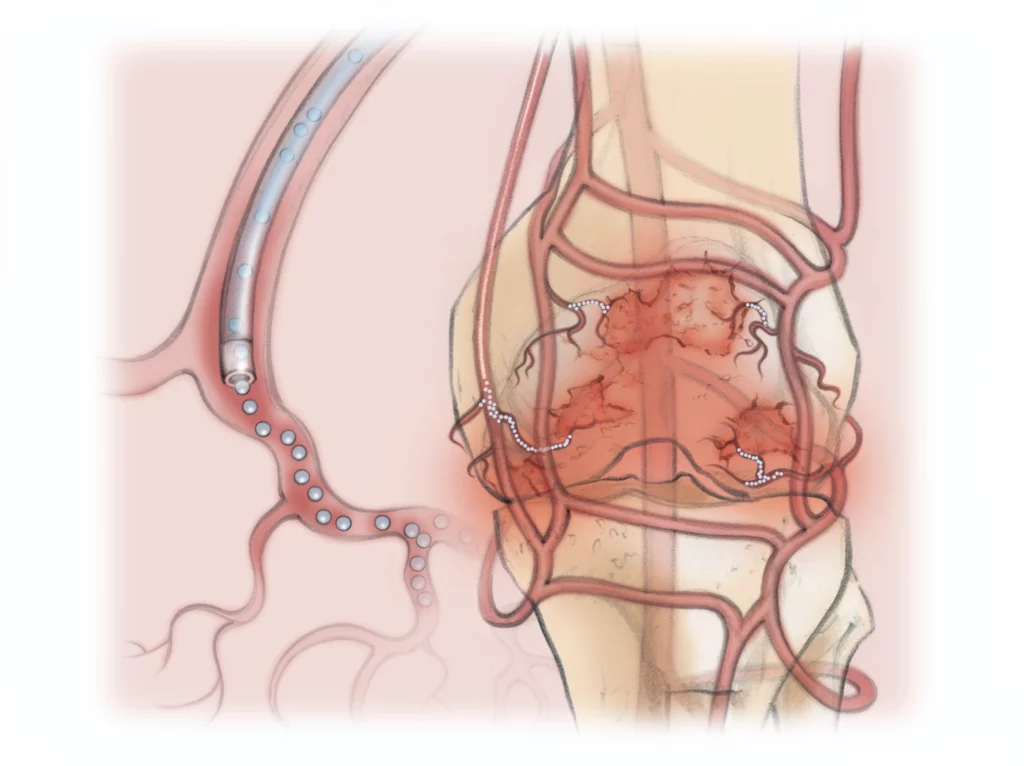
The procedure begins with a small puncture in the artery in the wrist or groin. Using advanced imaging, the interventional radiologist guides a thin catheter into the arteries that supply the inflamed areas of the knee.
Targeted Embolization
Tiny, medical-grade particles are released into these arteries to block the abnormal blood flow, causing inflammation. This reduces pain signals and helps decrease inflammation in the knee joint over time.
Recovery and Results
Most patients experience a noticeable decrease in knee pain within the first month after GAE, with results continuing to improve over time. Most patients are back to normal activities within days.
Comparing Your Treatment Options
| Feature | Genicular Artery Embolization (GAE) | Knee Replacement Surgery | Steroid Injections | Physical Therapy |
|---|---|---|---|---|
| Approach | Image-guided, minimally invasive | Open surgical procedure | Medication injected into joint | Strengthening and mobility exercises |
| Hospital Stay | Outpatient | 1–3 days | Outpatient | Outpatient |
| Recovery Time | 2–5 days | 6–12 weeks | Short-term relief | Ongoing commitment |
| Effectiveness | Long-lasting pain relief | Highly effective | Temporary improvement | Helps manage symptoms |
| Anesthesia | Local with sedation | General or spinal | Local | None |
| Ideal Candidates | Moderate to severe knee pain from arthritis | Severe joint damage | Mild to moderate arthritis | Early-stage or post-treatment care |
What to Know About Genicular Artery Embolization
Who is a candidate for GAE?
GAE is best suited for patients with moderate to knee pain from osteoarthritis who have not found adequate relief from medications, injections, or physical therapy and who wish to avoid surgery.
Is GAE safe?
Yes. GAE is a safe, FDA-recognized procedure performed under image guidance by trained interventional radiologists. Complications are rare and typically mild.
How long does the procedure take?
The procedure usually takes one to two hours. Patients are monitored briefly afterward and can go home the same day.
When will I notice results?
Most patients experience gradual pain relief beginning within two to four weeks after the procedure, with continued improvement over several months.
Will my insurance cover GAE?
Genicular artery embolization is covered by many insurance providers when medically indicated. Our team will confirm coverage and assist with all pre-authorizations.

Our Team
At the heart of Peak IR is a team of physicians who combine national expertise with a local commitment to care.




Take the First Step Toward Relief
At Peak IR, we believe patients deserve lasting relief without invasive surgery or prolonged recovery. Our specialists use image-guided procedures like genicular artery embolization to help restore comfort, mobility, and confidence—so you can get back to the life you love.